
How energy class F or G cuts your property's value and mortgage in Portugal (the desconto castanho)
The desconto castanho, or brown discount, is the penalty a low energy class puts on a Portuguese property's value and financing. Here is how it works.
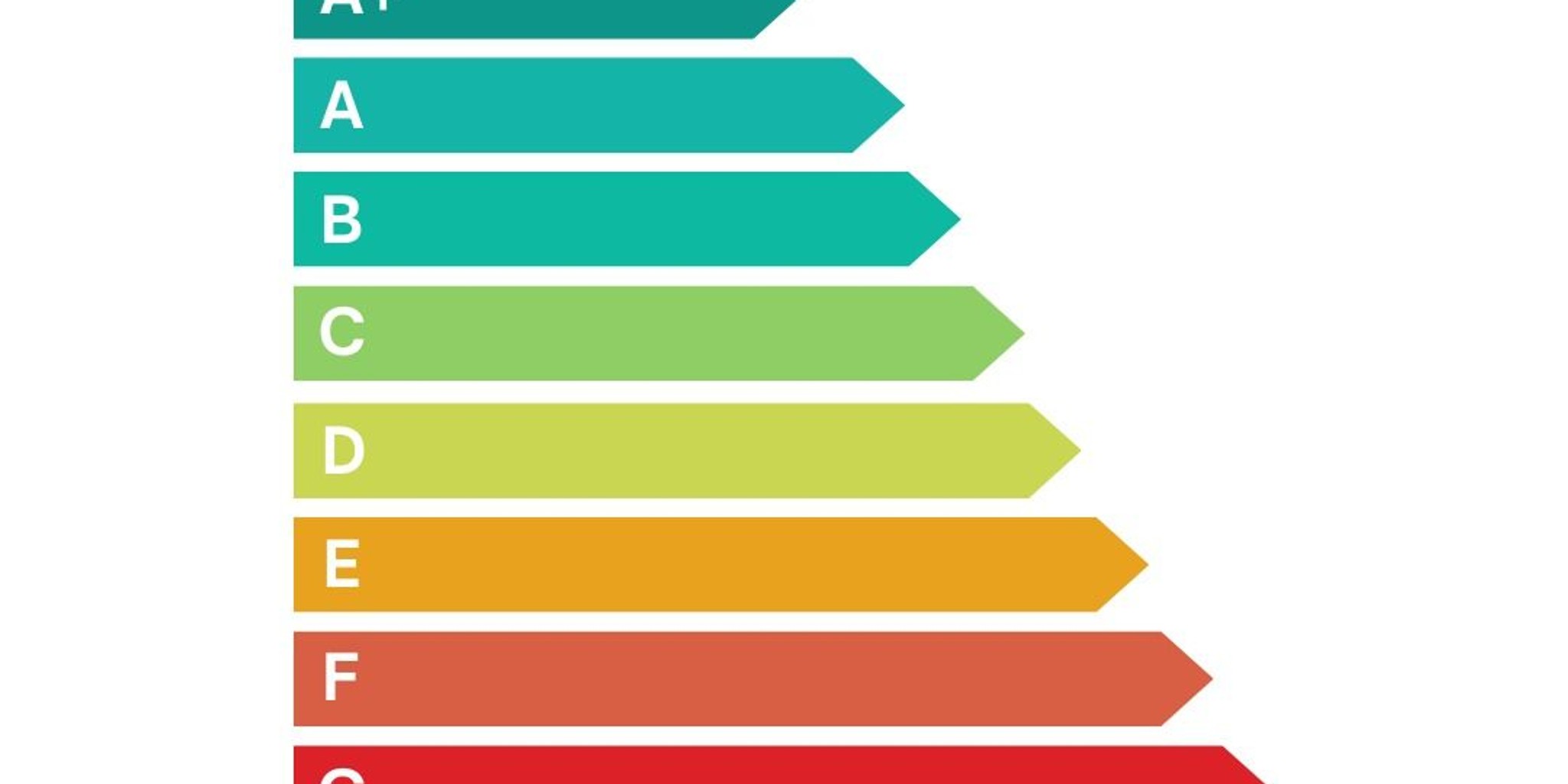
A low energy class quietly cuts what a property is worth and what a bank will lend against it. Portuguese buyers are starting to call it the desconto castanho, the brown discount: the penalty attached to the worst-rated homes. Academic studies put the value effect at roughly 0.9% per energy class, so the gap between an A and an F compounds across the scale. The same rating that lowers the price also tightens the financing, as banks price energy risk into their lending. This guide, part of our EPBD compliance guide for Portugal, explains how the discount works on value and on mortgages, what the EPBD timeline adds, and what an F-rated buyer should check. The EPBD Compliance Tracker estimates the upgrade cost by class. This is general information, not tax, legal, or financial advice.
Table of Contents
- What is the desconto castanho (brown discount)?
- How does a low energy class cut a property's value in Portugal?
- How does energy class affect your mortgage and financing?
- What does the EPBD timeline mean for an F-rated property?
- What should an F-rated buyer check and negotiate?
- Frequently Asked Questions
What is the desconto castanho (brown discount)?
The desconto castanho is the financial penalty a low energy class places on a property: a lower market value and tighter, costlier financing.
The desconto castanho, brown discount in English, names something the market already does: it pays less for inefficient buildings. Institutional investors have used the term brown discount for years, and analysts at firms like JLL, Nuveen, and Colliers track it across European real estate. What Portuguese buyers lacked was a name for it at the level of a single home purchase. The desconto castanho fills that gap. Naming it matters, because what gets named gets negotiated. A buyer who knows the discount exists asks for it; a buyer who does not pays the efficient-home price for an inefficient home.
The penalty has two parts. The first is value: a worse energy class lowers what buyers will pay. The second is financing: a worse class makes the property harder and more expensive to fund. They reinforce each other, because a bank that lends less against an inefficient home shrinks the pool of buyers who can afford it, which pushes the price down further. The rest of this guide takes each part in turn, then adds the regulatory pressure that is making the discount grow.
How does a low energy class cut a property's value in Portugal?
Academic studies estimate a value effect of roughly 0.9% per energy class, so the gap between the top and bottom of the scale compounds into a meaningful discount.
Portugal's residential energy certificate runs from A+ down to F, so F is the lowest national class; the scale has no G. Each step down the scale carries a cost. Academic studies estimate the value effect at around 0.9% per class (always treat this as an estimate, not a fixed rule), which sounds small until it compounds. Across several classes, the gap between an efficient home and the worst-rated one becomes a real share of the price.
The discount is not uniform. It is sharper where buyers are informed and where running costs bite, and it widens as energy prices rise and as the regulatory pressure below builds. At the other end, the top classes can carry a small premium: an A or A+ home may qualify for a reduced IMI in some municipalities (this varies by município), and it sells faster.
To see the compounding, picture two otherwise identical flats, one rated B and one rated F. At roughly 0.9% per class, the steps down the scale stack into a discount of several percent of the price, before a single euro of running cost or upgrade work enters the calculation. On a typical purchase, that is a negotiating range, not a rounding error. For a buyer, the practical reading is that the energy class is not a detail on the certificate; it is a number that moves the price.
How does energy class affect your mortgage and financing?
Banks price energy risk into lending: efficient homes can access green mortgage terms, while the lowest-rated properties face tighter conditions and harder approval.
The financing side of the brown discount is the one buyers notice last and regret most. Lenders increasingly treat energy performance as a risk factor, because an inefficient property costs more to run, faces future upgrade obligations, and is harder to resell. That feeds into the terms. Efficient homes can access green mortgage products with better conditions, while a low-rated property can mean a more cautious valuation and a tougher approval.
This matters most for buyers who depend on a mortgage rather than cash. A property that looks affordable on the asking price can become unaffordable if the bank lends less against it, the same dynamic we describe in our guide to the true cost of buying property in Portugal. The energy class belongs in the financing conversation from the start, not after an offer is accepted.
There is a resale angle too. The buyer you eventually sell to will face the same financing test, so an inefficient home is harder to exit, not just harder to enter. Lenders are moving in one direction on this, and the gap between what they will fund for an efficient home and an inefficient one is widening rather than closing.
What does the EPBD timeline mean for an F-rated property?
The EU EPBD pushes buildings to improve over time, but for homes it sets a national trajectory, not a ban: a low-rated property can still be sold.
The pressure behind the brown discount comes from the EU Energy Performance of Buildings Directive (Diretiva (UE) 2024/1275). Portugal passed the 29 May 2026 transposition deadline without completing it; as of July 2026 the framework is still being prepared by a working group (GT-EPBD) coordinated by ADENE, alongside a National Building Renovation Plan (PNRE). The direction is set even while the detail is pending.
Here is the part that gets misreported, so read it carefully. For homes, the EPBD does not ban the sale of a low-rated property and does not force each dwelling to a set class. It sets a national trajectory: member states must cut the average energy use of housing by 16% by 2030 and by 20% to 22% by 2035, with at least half the savings coming from the worst-performing homes (Article 9). The hard minimum energy performance standards with 2030 and 2033 deadlines apply to non-residential buildings, not to your home. So an F-rated home can still be sold. What changes is the pressure around it: upgrade expectations, running costs, and the financing and value penalties already described. That trajectory is what the brown discount prices in ahead of time.
For a buyer, the takeaway is calm but clear. Nobody will stop you selling an F-rated flat, and nobody will seize it. What happens is slower and more financial: the worst-performing homes face rising upgrade expectations and a market that increasingly rewards efficiency. The brown discount is the market doing today what the regulation signals for tomorrow.
What should an F-rated buyer check and negotiate?
Treat a low energy class as leverage: price the upgrade cost, fold it into the offer, and confirm the certificate is valid before you commit.
A low energy class is not a reason to walk away; it is a reason to negotiate with numbers. Start by estimating what it would cost to improve the property, then bring that figure to the table. The RealOS EPBD Compliance Tracker estimates the upgrade cost by energy class and maps the relevant deadlines, which turns a vague worry into a line item you can argue.
A few practical checks. Confirm the energy certificate exists and is current; obtaining or renewing one is a physical service, handled by InspectOS through its energy certificate guide, and the deeper compliance picture sits in its EPBD compliance guide. Ask what the running costs actually are, because the brown discount is partly a fuel bill in disguise. And read the class alongside the price: a low rating with a steep upgrade cost is a discount you should capture, not a problem you should inherit at full price. The same logic applies in Portuguese in our guide to what the energy certificate means for your budget.
Keep the order simple. First, get the real energy class and confirm the certificate is valid. Second, estimate the upgrade cost by class. Third, subtract a fair share of that cost from your offer, with the estimate in hand. A seller who priced the property as if the rating did not matter has left that discount on the table for you to claim.
Estimate the upgrade cost by energy class and see the deadlines that apply, before you make an offer on a low-rated property.
→ Use the EPBD Compliance Tracker: deadlines and upgrade cost by class
This is general information, not tax, legal, or financial advice. Energy regulation is changing; confirm the current rules for your situation with a qualified professional.
Frequently Asked Questions
What is the desconto castanho?
The desconto castanho, or brown discount, is the financial penalty a low energy class puts on a property: a lower market value and tighter, more expensive financing. It is the buyer-level version of a concept institutional investors have tracked across European real estate for years.
Can you sell an F-rated property in Portugal?
Yes. The EPBD does not ban the sale of low-rated homes. For residential buildings it sets a national energy-reduction trajectory, not a per-dwelling class requirement. An F-rated home can be sold, though it carries the value and financing discount described here.
Does energy class affect your mortgage in Portugal?
Increasingly, yes. Banks treat energy performance as a risk factor. Efficient homes can access green mortgage terms, while the lowest-rated properties can face more cautious valuations and tougher approval. For a mortgage-dependent buyer, the class belongs in the financing conversation early.
What is the lowest energy class in Portugal?
F. Portugal's residential energy certificate runs from A+ at the top down to F at the bottom; the national scale has no G. The brown discount falls hardest on the lowest classes, which in Portugal means F.
Will F-rated properties lose value over time?
The pressure points that way. As energy prices rise, buyers become better informed, and the EPBD renovation trajectory advances, the discount on inefficient homes tends to widen. That is precisely why the cost to upgrade is worth pricing into the offer today.
Conclusion
The desconto castanho is real money, split between a lower value and harder financing, and the EU renovation trajectory is making it grow. It is not a sale ban, so a low-rated home is a thing to negotiate, not avoid. Price the upgrade with the EPBD Compliance Tracker, bring that number to the table, and treat the energy class as leverage rather than a surprise. The brown discount only costs you if you pay full price for it. Seen clearly and priced honestly, a low energy class becomes one more number you have on your side of the table.
Updated July 2026 | RealOS Portugal Reviewed by Filipe Dornellas
Sources: EU Energy Performance of Buildings Directive (Diretiva (UE) 2024/1275), Article 9 (residential trajectory: 16% average energy reduction by 2030, 20 to 22% by 2035; non-residential MEPS: worst-performing 16% by 2030, 26% by 2033); ADENE / GT-EPBD (Portugal transposition in preparation, July 2026; National Building Renovation Plan, PNRE); academic studies on energy-class value effect (approximately 0.9% per class); Portuguese SCE residential scale A+ to F.